Shiitake AI Bot

Your mushroom-growing learning partner

About this assistant: This offline version uses a curated FAQ and keyword-based answers; it is not connected to a live AI model. Advice is educational and must be checked against your strain supplier’s protocol and qualified cultivation guidance.

🌱 Today's crop record

Records stay in this page session only. Export them before closing the browser.

💬 Ask your AI Bot

Namaste, Farmer! I am your Shiitake AI Bot. Which batch and cultivation stage are you working on today? Tell me what you observe, and I will help you decide what to check next.
Try asking about:

Offline knowledge mode · answers use curated topics and keyword matching, not a live generative AI service.

Shiitake Knowledge Centre

Learn about the mushroom, nutrition, cultivation stages, hygiene and common growing problems. Select any question to read an answer or send it to the chat assistant.

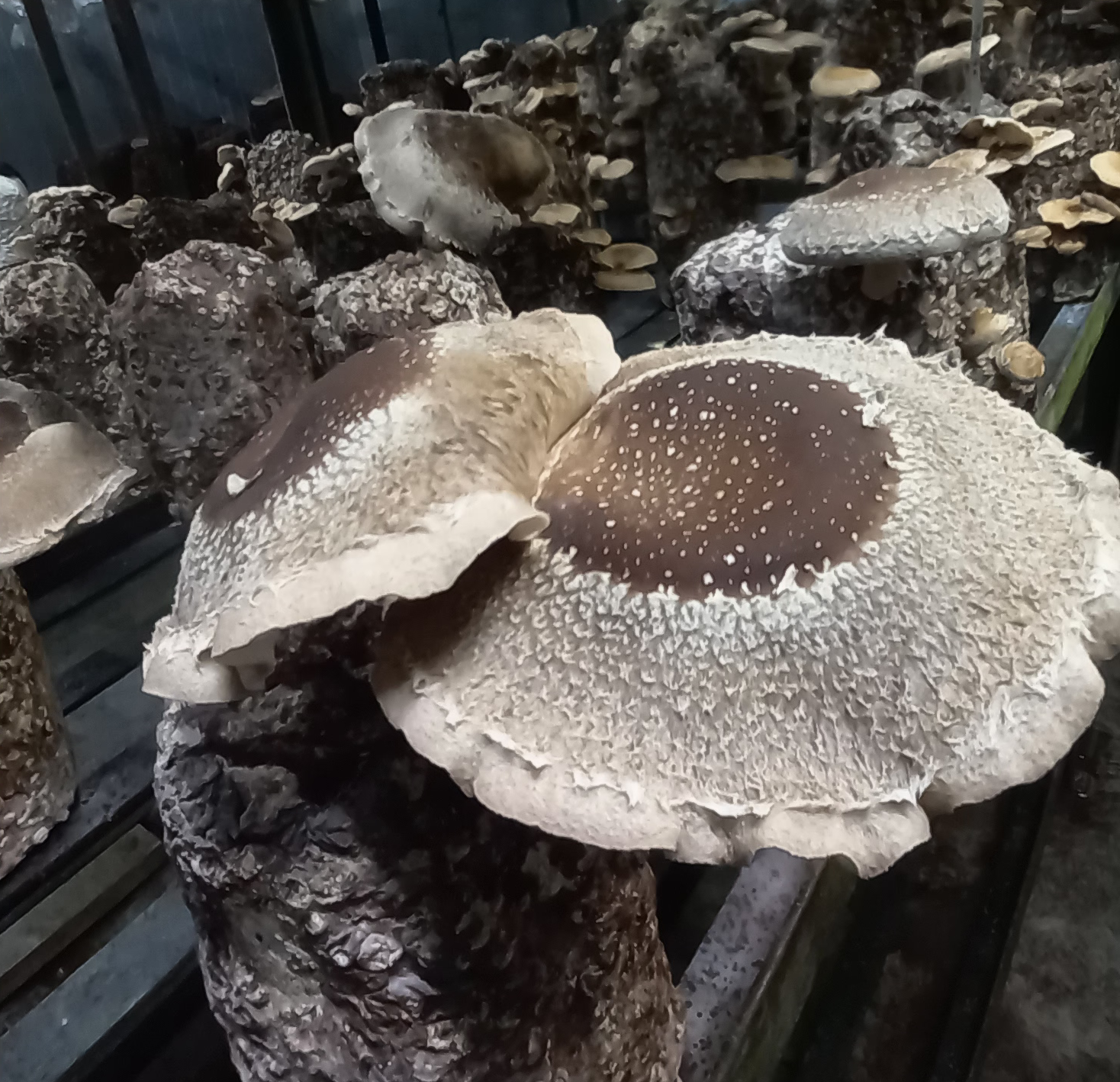
Shiitake mushroom image

What is Shiitake?

Shiitake (Lentinula edodes) is an edible wood-decaying mushroom traditionally cultivated on hardwood logs and also grown commercially on prepared, sterilised sawdust blocks. It has a brown cap, pale gills and a savoury, umami flavour.

Commercial performance depends on strain, substrate, block preparation, maturation, environmental conditions and careful hygiene. Follow the strain supplier's validated protocol rather than applying one temperature or humidity target to every strain.

Shiitake mushroom image

Nutrition at a glance

Approximate values for 100 g raw, fresh shiitake from USDA SR Legacy data. Drying and cooking change the values per 100 g because water content changes.

NutrientApprox. amount
Energy34 kcal
Protein2.24 g
Carbohydrate6.79 g
Dietary fibre2.5 g
Total fat0.49 g
Potassium304 mg
Niacin (B3)3.88 mg
Riboflavin (B2)0.22 mg

Source: USDA FoodData Central, SR Legacy, “Mushrooms, shiitake, raw” (FDC 169242). Values are approximate, not a product label. Nutritional information is not medical advice.

Frequently asked questions

What are the main steps in shiitake cultivation?

Choose a suitable strain and its supplier protocol; prepare a clean hardwood-based substrate or use the appropriate log method; hydrate and mix consistently; fill and sterilise sawdust blocks using a validated process; inoculate hygienically with quality spawn; incubate until colonised; allow the required browning/maturation; induce fruiting as the strain protocol specifies; manage fresh air, humidity, light and moisture; harvest carefully; then rest and manage blocks between flushes.

Which substrate is suitable for shiitake?

Commercial blocks commonly use suitable hardwood sawdust with a measured supplement such as bran, plus water. Species of wood, particle size, supplement rate, moisture and sterilisation process affect performance and contamination risk. Do not use a universal recipe blindly: follow a validated recipe for your strain, equipment and local materials, and record ingredient weights and moisture.

How should spawn inoculation be handled?

Use fresh, correctly identified spawn from a reliable supplier. Clean and organise the work area, sanitise tools and hands, minimise the time sterilised substrate is exposed, keep containers closed when possible, and label each batch with strain, spawn lot, date and recipe. Follow the validated sterilisation and cooling procedure for your equipment. Never inoculate a hot block.

What should I monitor during incubation?

Record block age, strain, incubation temperature history, substrate batch, and whether mycelium spread is even. Keep blocks clean and avoid unnecessary handling. Slow growth can be associated with spawn quality, substrate moisture or formulation, temperature excursions, poor mixing, or contamination. Check records before changing conditions; target ranges are strain- and process-specific.

Why do shiitake blocks brown before fruiting?

Browning is part of block maturation in many sawdust-block systems and can include surface colour changes and development of a protective outer layer. The timing and appearance depend on strain and process. Use the supplier's maturity indicators; do not trigger fruiting based only on a calendar or colour if the block is not mature.

Why are my blocks not pinning?

Possible factors include insufficient block maturity, unsuitable strain-specific fruiting conditions, weak or uneven colonisation, inadequate fresh-air exchange, unsuitable light, surface moisture problems, or incorrect induction timing. Check strain guidance, block age, recent temperature and relative-humidity records, air exchange, watering and induction history. Change one variable at a time and record the result.

How should humidity and watering be managed?

Use a calibrated hygrometer and observe the crop, not just a setpoint. Fruiting needs moisture in the air, but prolonged wetness, stagnant air and water pooling can increase disease risk. Avoid drying the developing mushrooms; use clean water and the farm's validated misting or soaking method. The appropriate relative humidity and watering schedule depend on stage, room airflow and strain.

Why is fresh air important?

Fresh-air exchange helps remove carbon dioxide and supports normal cap and stem development. Inadequate exchange can contribute to elongated stems or unusual morphology, but similar symptoms may have other causes. Check ventilation, crowding, humidity and the strain's requirements together. Avoid sudden, excessive ventilation that dries the crop.

Does shiitake need light?

Light is commonly part of the fruiting environment, but intensity and duration should follow the strain-specific production protocol. It is not a substitute for appropriate fresh air, moisture, temperature or block maturity. Record the lighting schedule when troubleshooting poor pinning or unusual shape.

What should I do if I see green or black spots?

Do not open, sniff or shake a suspicious block. Minimise handling, separate it from healthy blocks according to the farm hygiene procedure, and record the colour, location, spread, date and batch. A picture alone cannot reliably identify an organism. Seek qualified advice and clean the area using your approved procedure; do not consume suspect material.

When and how should shiitake be harvested?

Harvest at the maturity stage and cap opening preferred by your market and strain protocol, before quality deteriorates. Use clean hands or a sanitised tool, handle caps gently and remove debris. Weigh marketable and rejected mushrooms separately, record the flush number and harvest date, and avoid damaging the block unnecessarily.

What happens between flushes?

After harvest, blocks may need a recovery period and carefully managed moisture before another flush. Resting duration and rehydration or soaking procedures vary by strain, block formulation and production system. Follow the supplier protocol, use clean water and sanitation, and record dates, treatment and next-flush yield.

How is biological efficiency calculated?

Biological efficiency (BE %) = total fresh mushroom yield ÷ initial dry substrate weight × 100. Example: 1,000 g fresh mushrooms from 2,000 g initial dry substrate gives 50% BE. Use total yield over the same defined batch and do not divide by wet substrate weight. State clearly whether the result covers one flush or all flushes.

What is the nutritional value of shiitake?

For 100 g raw fresh shiitake, USDA SR Legacy reports approximately 34 kcal, 2.24 g protein, 6.79 g carbohydrate, 2.5 g fibre, 0.49 g fat and 304 mg potassium. It also provides B vitamins such as niacin and riboflavin. Values vary with strain, growing conditions, storage and cooking. Nutrition facts do not prove that shiitake treats or prevents disease.

How should shiitake be prepared for eating?

Buy or harvest correctly identified food-grade mushrooms, clean them appropriately and cook thoroughly before eating. Do not eat mushrooms from contaminated blocks or uncertain sources. Some people can experience adverse skin reactions after eating undercooked shiitake; if symptoms occur, stop eating and seek medical advice.

How should fresh or dried shiitake be stored?

Cool fresh mushrooms promptly and store them in a clean, breathable food-safe container under suitable refrigeration; avoid leaving them warm and damp. Drying requires a controlled process and moisture-proof packaging after the product is fully dried and cooled. Shelf life depends on handling, packaging and temperature, so follow validated food-safety practices and local requirements.

Knowledge content is educational. Follow validated strain-specific protocols and local food-safety requirements.

📊 Session records

Records entered0
Fresh yield entered0 g
Batches recorded0
Date/timeBatchStageTemp °CRH %Yield gObservation
No records yet. Add a crop record above.